
Newborn Essentials Checklist for New Parents - What You Actually Need
Preparing for a new baby can make even a simple shopping trip feel impossible. One list says buy ten swaddles, another insists on gadgets, and someone will always recommend a product they used once at 3am and never touched again.
The truth is simpler. Newborns need safe sleep, regular feeds, clean nappies, warm layers, and calm adults who can find things quickly. The best newborn essentials are the items you will reach for every day, not the products that look lovely in a nursery photo.
This newborn essentials checklist focuses on practical basics for the first few weeks. It covers feeding, sleeping, changing, clothing, travel, nursery organisation, and a few parent comforts that make daily life easier.

Start with the essentials you will use every day
A newborn does not need a house full of equipment. Most early days run around the same cycle: feeding, changing, sleeping, cuddling, and washing. When you shop with that routine in mind, it becomes easier to spot what matters.
Here is the quick version.
Category | Useful essentials |
Feeding | Bottles if needed, sterilising equipment, muslin cloths, bibs, nursing pillow |
Sleeping | Moses basket or cot, fitted sheets, cellular blankets, baby monitor |
Changing | Nappies, wipes, nappy cream, changing mat, nappy sacks |
Clothing | Sleepsuits, bodysuits, hats, socks, cardigans or layers |
Organisation | Nappy caddy basket, nursery storage baskets, changing station organisers, clothes dividers |
Travel | Pushchair, footmuff, changing bag, car seat |
Parent comfort | Water bottle, snacks, breast pads if needed, comfortable feeding chair |
This list gives you a solid base before baby arrives. You can always add extra items later once you know your baby, your home, and your routine.
Feeding essentials for the first weeks
Feeding takes up a large part of newborn life, whether baby is breastfed, bottle-fed, combination-fed, or expressed milk-fed. The most useful feeding items are the ones that help you stay comfortable and reduce mess.
Bottles if you need them
If you plan to bottle-feed, combination-feed, or express milk, have a small set of newborn bottles ready. There is no need to buy a huge collection before baby arrives, as some babies prefer one teat shape or flow over another.
A few bottles are enough to get started. You can buy more once you know what works.
Sterilising equipment
For bottle-feeding or expressing, sterilising equipment is a daily essential. Options include electric sterilisers, microwave sterilisers, or cold-water sterilising systems. The best choice is the one that fits your kitchen and feels easy to repeat several times a day.
Keep bottle brushes and a clean drying area nearby too. Small habits like this make feeding prep much less stressful.
Muslin cloths
Muslin cloths are one of the most used newborn items. They work for winding, wiping milk dribbles, protecting clothes, catching spit-up, and placing over your shoulder during feeds.
Buy more than you think you need, because they end up everywhere. A neat stack in the nursery, one in the changing bag, and one near the sofa will save many trips across the room.
Bibs
Newborn bibs are useful if your baby dribbles milk or spits up often. Soft, absorbent bibs are usually more practical than stiff or decorative ones.
Look for bibs that wash well and fasten securely without feeling bulky around the neck.
Nursing pillow
A nursing pillow is not essential for every family, but many parents find it helpful during long feeds. It can support your arms, back, and baby’s position, especially during night feeds when everyone is tired.
If space is limited, try to choose one that can live beside your usual feeding spot rather than needing to be fetched each time.

Sleeping essentials that keep things simple
Newborn sleep can feel unpredictable, so the sleeping setup should be as clear and fuss-free as possible. Focus on a safe, flat sleeping space and easy-to-wash bedding.
Moses basket or cot
A Moses basket, crib, or cot gives baby a dedicated place to sleep. Many families use a Moses basket or bedside crib in the early months because the smaller size can feel practical for night feeds and daytime naps.
Choose a firm, flat mattress that fits the sleep space properly. Avoid adding loose extras such as pillows, duvets, large toys, or bumpers.
Fitted sheets
You will need several fitted sheets for the mattress. Newborns can be messy, and a spare sheet in the middle of the night is much better than trying to find one while half asleep.
Two may work in theory, but three or four gives more breathing room when laundry builds up.
Cellular blankets
Cellular blankets are popular because they are light, breathable, and easy to layer. They can be useful in cooler weather and are often easier to adjust than thick blankets.
Choose a few in different weights if your home changes temperature through the day. In the UK, bedrooms can feel warm one evening and chilly the next, so layers help.
Baby monitor
A baby monitor is useful if baby sleeps in a different room during naps or once they are older. In the earliest weeks, many babies sleep close by, but a monitor can still give peace of mind around the home.
A simple audio monitor is enough for many families. Video monitors can be helpful, but they are not essential for everyone.
Changing essentials you will reach for constantly
Changing supplies are the items you will use again and again. This is one area where having a ready stock before baby arrives makes sense.
Nappies
Newborn nappies disappear quickly. Start with a couple of packs in a newborn size rather than filling a cupboard, as babies grow at different rates.
If you plan to use reusable nappies, you may still want a small backup pack of disposables for the first days, hospital bag, or travel.
Wipes
Baby wipes are useful at changing time, after feeds, in the car, and for general clean-ups. Some families prefer cotton wool and water in the early newborn days, especially for the first nappy changes.
Whatever you choose, keep supplies close to the changing area and in the changing bag.
Nappy cream
A basic barrier cream can be useful if baby’s skin becomes sore. You may not use it at every change, but it is worth having a tube ready before you need it.
Keep one at home and a smaller one in the changing bag if you plan to be out often.
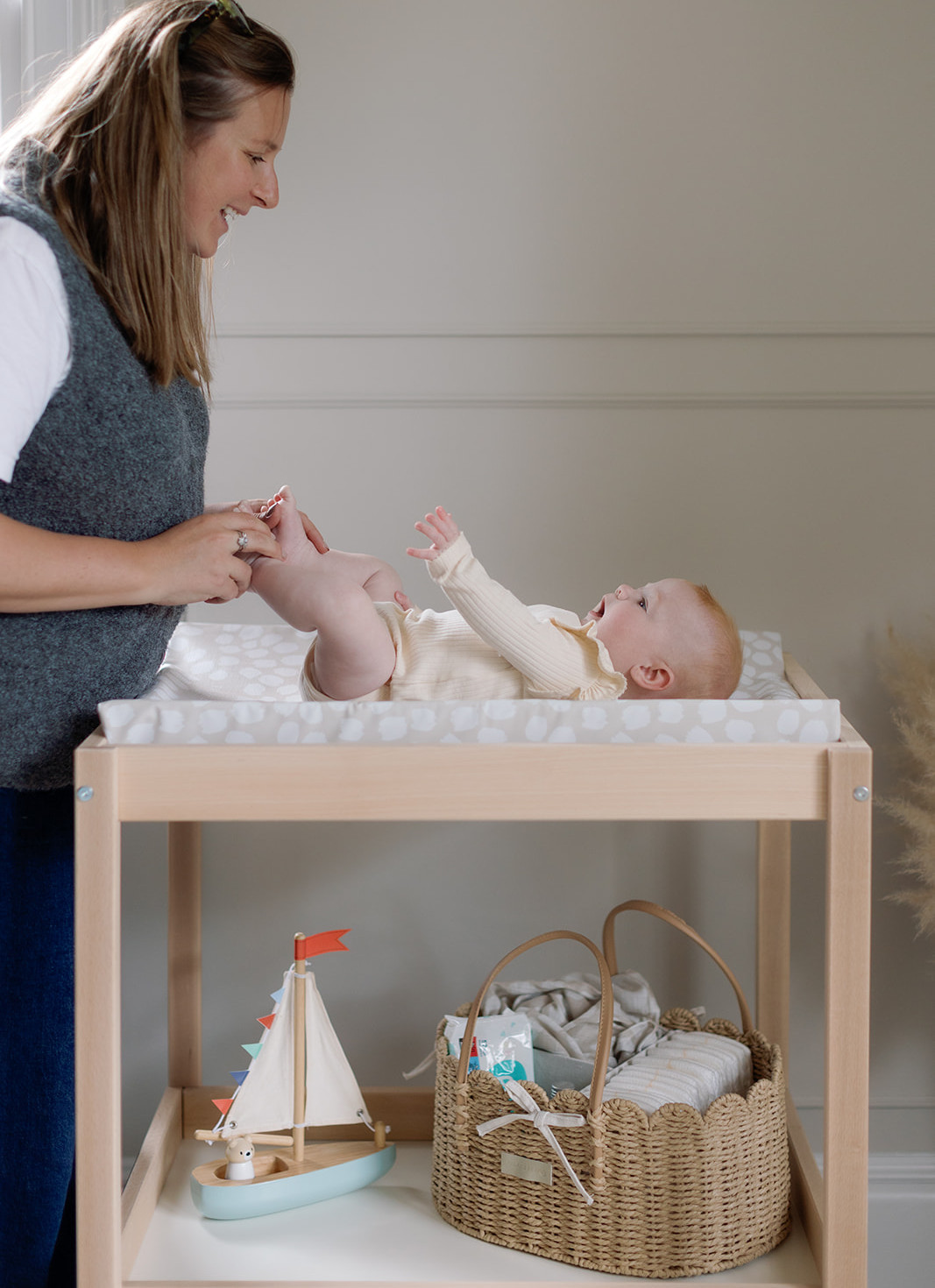
Changing mat
A wipe-clean changing mat gives you a safe, practical surface for nappy changes. You do not need a full changing table unless it suits your space.
Many families use a mat on the floor, bed, or chest of drawers. If you use a raised surface, always keep one hand on baby and keep supplies within reach.
Nappy sacks
Nappy sacks help contain used nappies, especially when you are away from home. Choose scented or unscented depending on your preference.
They are also handy for wet clothes, wipes, and small laundry emergencies.
Clothing basics that are easy to wash and layer
Tiny outfits are tempting, but newborn clothing needs to be soft, simple, and quick to change. The early weeks involve frequent nappy changes, milk spills, and laundry that seems to appear from nowhere.
Focus on everyday clothes before special outfits.
Useful clothing basics include:
Sleepsuits with poppers or zips
Short-sleeved or long-sleeved bodysuits
A few cardigans or soft layers
Newborn hats for the early days and outdoor trips
Socks or booties if sleepsuits do not have feet
A warm pramsuit or jacket for colder weather
Sleepsuits are often the hardest-working clothes. They are comfortable for sleeping, feeding, cuddling, and going out. If you buy only one clothing item in good numbers, make it sleepsuits.
Choose clothes that open wide enough for easy changes. Designs with awkward buttons, tight necks, or complicated fastenings may look lovely but can become frustrating at 2 am.
It also helps to separate clothing by size. Babies can move from newborn to 0 to 3 months quickly, while others stay in tiny sizes longer. Clothes dividers make it easier to see what fits now and what can wait.
Nursery organisation essentials many parents forget
Nursery organisation can sound like a nice extra, but it often becomes one of the most useful parts of the setup. When baby arrives, you will be doing simple tasks while tired, one-handed, or in a hurry. Good storage keeps daily supplies where you need them.
The goal is not a perfect nursery. The goal is a system that makes nappies, wipes, clean clothes, and muslins easy to grab.
Nappy caddy basket
A nappy caddy basket lets you move changing supplies around the house. Fill it with nappies, wipes, cream, sacks, spare clothes, and muslin cloths.
This is especially useful if the nursery is upstairs and you spend much of the day downstairs. Instead of returning to the changing area every time, you can create a small changing station wherever you are.
Nursery storage baskets
Storage baskets are ideal for items that do not need folding perfectly. Use them for blankets, muslins, toys, extra nappies, or laundry waiting to be washed.
Open baskets are often more useful than lidded boxes because you can grab what you need quickly.
Changing station organisers
A changing station organiser keeps the small items together. It may sit on a changing table, shelf, or beside a mat.
Good changing organisation means you are not searching for wipes while baby is wriggling. Keep the items you use most often in the easiest spots.
Clothes dividers
Clothes dividers are simple but useful. They separate baby clothes by size, which helps avoid forgotten outfits at the back of a drawer or wardrobe.
They also make gifts easier to manage. If friends and family buy different sizes, you can store them neatly until baby grows into them.
Travel essentials for first outings
You may not feel like going far in the first weeks, but you will still need safe and practical travel items ready. Hospital trips, appointments, short walks, and family visits all need a little planning.
Car seat
A car seat is essential if you will bring baby home by car. Fit it before your due date and learn how it works. The first time using it should not be in a hospital car park while everyone is tired.
Make sure the seat is suitable for newborns and compatible with your vehicle. If you use a second-hand car seat, only do so if you know its full history and that it has not been in an accident.
Pushchair
A pushchair or pram gives you freedom for walks and errands. For newborns, choose a setup suitable from birth, usually one that allows baby to lie flat.
Think about your daily life. A lightweight pushchair may suit public transport and smaller homes. A sturdier model may suit long walks, uneven pavements, or rural paths.
Footmuff
A footmuff is useful in colder months. It keeps baby warm in the pushchair without needing lots of loose blankets.
For summer babies, this can wait until the weather turns cooler.
Changing bag
A changing bag does not need to be a specialist baby bag, but it does need space and compartments. Pack nappies, wipes, sacks, muslins, spare clothes, a small toy, feeding items if needed, and a change of top for you if you want a backup.
Keep it partly packed near the door so leaving the house feels less like starting from scratch.

Everyday parent essentials matter too
Baby lists often forget the person doing the feeding, changing, carrying, and waking through the night. A few parent essentials can make the early weeks more comfortable.
Keep a reusable water bottle near your feeding spot. Feeding sessions can be long, and having water nearby saves repeated trips to the kitchen.
Snacks are also useful, especially one-handed options. Think cereal bars, crackers, fruit, nuts if safe for your household, or anything easy to eat between feeds.
Breast pads are helpful if you are breastfeeding or expressing. Some parents use disposable pads, while others prefer washable ones. If you are not breastfeeding, skip them.
A comfortable feeding chair can make a real difference. It does not have to be a new nursery chair. A supportive armchair, sofa corner, or bed setup can work if it keeps your back and arms comfortable.
The most useful tip is to build systems, not piles
It is easy to focus on buying everything before baby arrives. A better approach is to create small systems for the routines you will repeat every day.
Set up one place for feeding supplies. Create a changing area with everything within reach. Keep spare muslins in the rooms where you spend the most time. Put clean clothes where you can find the right size quickly.
That kind of preparation helps more than a cupboard full of unused products.
A simple setup might look like this:
A changing mat with nappies, wipes, cream, and sacks beside it
A nappy caddy basket for downstairs or the living room
A bedside feeding area with water, muslins, snacks, and a soft light
A drawer for current-size clothes only
A packed changing bag ready near the door
When daily items have a clear home, tired moments feel less chaotic.
Common questions about newborn essentials
When should newborn essentials be ready?
Most parents begin preparing several weeks before the due date. Aim to have the core items ready by the last month of pregnancy, especially the car seat, sleeping space, nappies, wipes, feeding supplies, and hospital bag basics.
Do you need a separate changing station?
Not always. A dedicated changing station is useful, but a changing mat and a well-stocked organiser can work just as well. The key is having nappies, wipes, cream, and clean clothes close by.
What products do parents use the most?
Nappies, wipes, muslin cloths, sleepsuits, blankets, and changing supplies tend to be used daily. Storage items such as a nappy caddy and nursery baskets can also become everyday favourites because they keep everything easy to find.
A realistic newborn checklist is enough
The best newborn setup is practical, calm, and easy to maintain. Start with nappies, wipes, clothing, muslin cloths, a changing mat, baby blankets, a safe sleeping space, feeding supplies, travel basics, and simple storage.
You do not need every baby product on the market before baby arrives. Prepare the routines first, then add extras only when they solve a real problem in your home.
Comments